
We are the Lorax and must speak for the trees
A report on a Los Angeles environmental struggle

I sit down on a thick wooden fence-post under a native coastal live oak at the mouth of the hidden oasis that is a section of San Pascual Park. Joining me are Amada Segura and Josh Kashapata, two stellar LA resident volunteers with the Save San Pascual Park group.
For Amada and Josh, their Save San Pascual Park journey started with spotting yard signs in their neighborhood. Soon after, they attended a land defense meeting at the Coyotl + Macehualli Lending Library community space in El Sereno. There they met one of the main organizers in the defense of this park: a proud long-time Angeleno and land defender hailing from East LA, Clara Solis.
Since then, Amanda and Josh have joined the park defense, offering their talents to aid in the battle against corrupt city governments, golf course management, and major media outlets.
Just as a single spark can start a prairie fire, a single neighbor—Steve Crouch—raised the alarm to others upon receiving mail about the Arroyo Seco Water Reuse Project. Among those was his childhood friend Clara Solis. This collaborative project by the cities of Pasadena and South Pasadena—both cities boasting significant affluent areas—requires the destruction of a natural space containing 136 trees, a biologically active waterway, and a safe haven for species including the majestic great blue heron. The parcel of lush land would be replaced with artificial pools and water-purifying systems to filter out bacterial contamination in the Arroyo Seco channel. Also included will be enough carefully landscaped native foliage to suitably cover the project in green paint and call it environmentally aligned.
The project claims to be a community-oriented, nature-based solution and receives funding from the Safe Clean Water Program, Measure W. However, the city’s own efforts, which have refused to educate and include the public, in the process reveal a different pattern. Los Angeles is almost 50% Hispanic or Latinx, but the outreach was only in English until people started calling them out. The pamphlets themselves contain so much misinformation; Save San Pascual Park went line by line on their social media and debunked them using the city’s own sources. One of these sources includes an environmental impact report completed by other cities, which only happened because they were sued by Clara Solis.
“There’s no ecological basis for any of their projects,” says Josh. “It’s kind of like a lot of them ignoring the root causes of issues but using those issues as justifications for projects. So like, runoff from the golf course or Rose Bowl is still going to be coming through here. This [project] is a band-aid for that; it’s not treating the problem at the source, which is obviously the ideal.”
The environmental impact report itself points to two golf courses as the sources of pollution for the waterways, but the cities have targeted this specific area instead. “They admit themselves, that they cannot conduct a nature-based system yet,” Amada adds. Meanwhile, groups like the Stewards of the Arroyo Seco, who are committed to natural restoration, have not been approached by either city.
Importantly, the Kizh Nation has been involved since the beginning, working through the AB 52 CEQUA process. AB 52 requires tribal consultation for projects such as the Arroyo Seco Water Reuse Project.
“They say they’ve had the consultation,” Amada states. “Chief Salas can tell you, and he has stated multiple times that all the consultation was [the tribe] receiving the initial project plans and the Kizh Nation saying ‘we’re not ok with this’ and Pasadena basically saying ‘Ok. We’re still gonna do it though.’
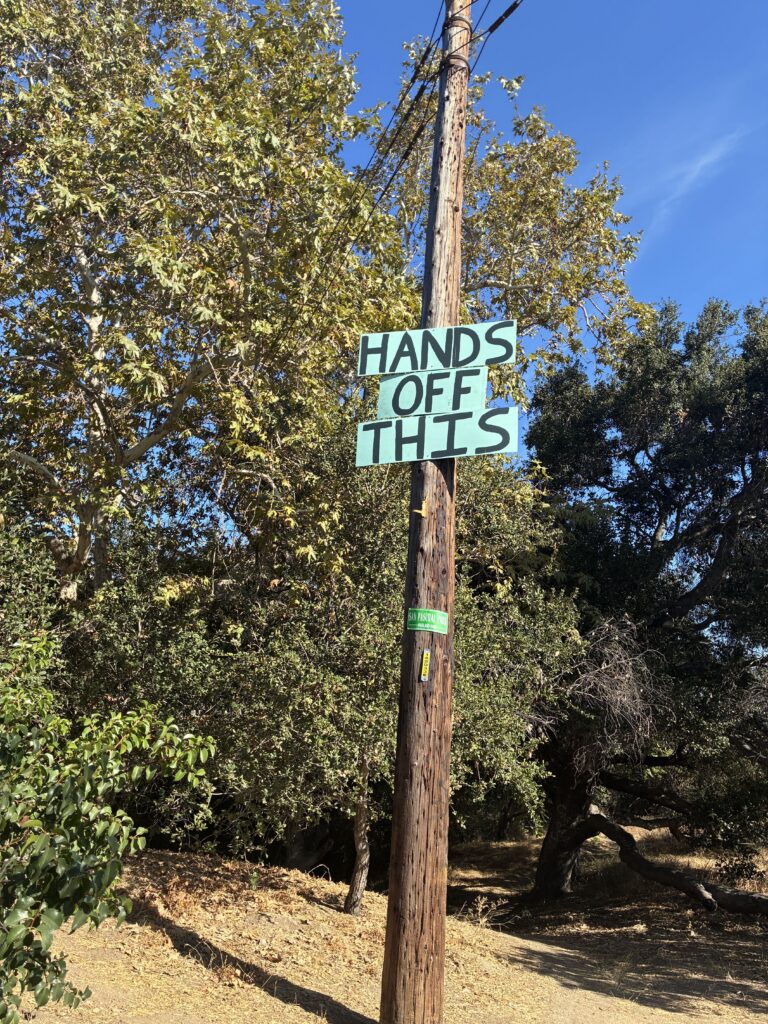
In addition, public records requests have gone unanswered, with no explanation as to why. A city administrator has run multiple public campaigns to slander members of Save San Pascal Park. The City of South Pasadena has been falsely claiming that parcel of land as its own, even though the official LA County zoning information says otherwise. Several media outlets, including The Los Angeles Times, have suspiciously biased articles in favor of the cities and golf courses.
Active SGV, a nonprofit based in several cities and 15 miles away, has allegedly been contracted by the City of Pasadena to do outreach for the Arroyo Reuse Project.”1 As this group tabled at the same farmer’s market as Save San Pascual Park, market-goers told members of Save San Pascual Park that Active SGV was telling people that the people of Save San Pascual Park were lying and should not be talked to.
Through all this and more, Amada and Josh have been contributing to the group’s growing numbers and impact.
The Lorax Must Mobilize for the Trees: Lessons in Building an Impact
What started as neighborly communication and yard signs is now a thriving volunteer-based social media success.
“As much as I hate Instagram, it really did what it needed to do for us,” says Amada, who found their niche in the group as a social media savant with previous nonprofit experience. “Within the first month of taking over the socials, we grew to over 100k viewers on our page. We went from 46 followers to over 1000 in like a month and a half.” You might not be able to use the master’s tools to dismantle the master’s house, but you sure can get more people to know about why the house needs to be torn down.
Their farmers’ market tabling has also seen success. They use the time to educate the public about the ongoing struggle, gather signatures, and sell merchandise to raise funds for their legal fees.
“Being at the farmers market and being able to connect with folks and just kind of just see people, you know, connect the dots right then and there and be like, this is messed up,” Amada relates. “Realizing that people can see through corruption and can really see the importance and value of our parks . . . that’s not something that’s been difficult to convince people.”
Amada also stresses the importance of reaching out to other groups, as they have received support from environmental groups such as Citizens for Los Angeles Wildlife (CLAW), the Los Angeles Audubon Society, and the Sierra Club.
“Realizing that there are so many groups that are willing to pitch in in the way that they can help is just a matter of actually connecting with them and getting them in.”
Democratic, community-based groups willing to fight for a future that benefits the people—not profits—are how we build our mobilizing muscles. They teach us to rally around shared causes—even if we might not totally agree politically. They inspire more to take action in their neighborhoods.
Nearby in Pasadena, people are chaining themselves to trees to prevent the Pasadena Unified School District (PUSD) from cutting them down. People are rallying against the removal of trees at the Santa Anita Park for the LA Olympics.
These groups connect us to other related struggles. The outcry for the trees at Santa Anita Park could easily lead someone to connect with the NOlympics LA campaign. The NOlympics campaign highlights the displacement of low-income tenants and increasing militarization of Los Angeles. The PUSD debacle is related to toxins from the devastating Eaton Fire—which leads to a rabbit hole about environmental devastation caused by poor land management and private companies prioritizing profit over safety.
Every struggle that brings people together to fight for what is right matters. For we all are the Lorax and all must speak for the trees.
This has been a report and interview from Los Angeles.
Opinions expressed in signed articles do not necessarily represent the views of the editors or the Tempest Collective. For more information, see “About Tempest Collective.”
Featured Image credit: Edward Kimmel and author; modified by Tempest.

Categories
We want to hear what you think. Contact us at editors@tempestmag.org. And if you've enjoyed what you've read, please consider donating to support our work:
DonateRose View All
Rose is a Los Angeles Tempest branch member with a focus on ecosocialism.