
U.S. Labor’s long history of Zionism
A review of Jeff Schuhrke’s No Neutrals There: U.S. Labor, Zionism, and the Struggle for Palestine
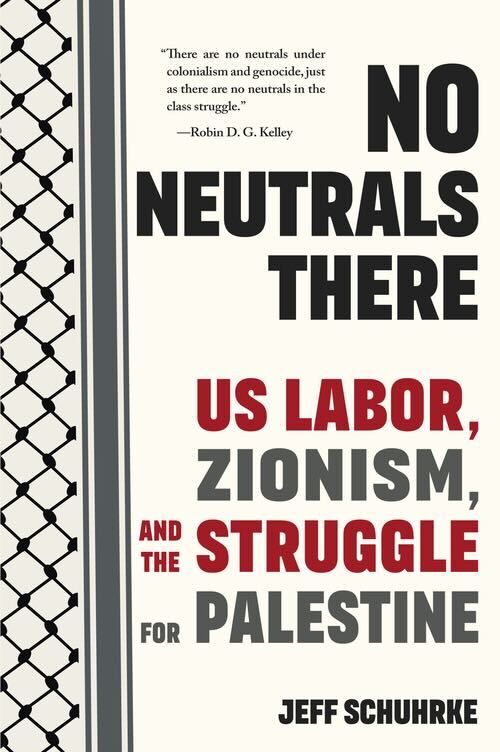
No Neutrals There
U.S. Labor, Zionism, and the Struggle for Palestine
by Jeff Schuhrke
Haymarket Books, 2025

No Neutrals There is an important contribution to organizing the power of labor in support of Palestinian liberation. It also helps us understand the connection between labor officialdom’s advocacy for Israel, and U.S. labor’s decline domestically.
In October 2023, a coalition of Palestinian unions called on unions internationally to take action to prevent genocide in Gaza. They called on the organized working class to stop the production and transport of arms to Israel, and to pressure governments to end military support.
International dock workers in several instances refused to handle weapons bound for Israel. In contrast, the union of U.S. East Coast and Gulf Coast dock workers on a 3-day strike in 2024 made an exception to load military cargo. But seven unions representing half a million workers sent an open letter to then-President Biden asking for a halt to military aid to Israel and a ceasefire. Academic workers at the University of California went on strike to defend Palestinian rights organizing. These are welcome steps toward breaking the hold of Zionism on U.S. labor.
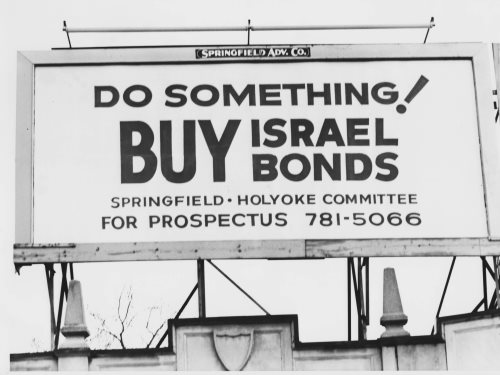
In response to the common rejoinder that Palestine is an out-of-bounds or divisive issue, No Neutrals There shows that U.S. labor has a reprehensible hundred-year history of official engagement in support of Zionism and Israeli colonization of Palestine. This includes pro-Zionist propaganda, fundraising through the purchase of Israel bonds, and lobbying to support military aid to Israel.
In 1950, William Green and Philip Murray, presidents of the AFL and CIO, lobbied the Truman White House for arms to Israel. They proclaimed in a joint statement, “As unionists and as believers in the continuance of the peace and in democratic opportunity, we trust that our government will stand against further aggression directed at the State of Israel and its courageous enlightened people who, like we, are seeking to achieve a decent economy and full utilization of the resource of nature for the benefit on mankind.”
U.S. labor leaders cultivated strong ties to the Histadrut, labor Zionism’s “union” federation serving as a colonizing institution that provided jobs, housing, and social welfare to its Jewish-only members. They rallied workers’ support for Israel through union fundraising campaigns for health centers and other settler infrastructure.
There was resistance. Led by the Arab Workers Caucus, auto workers in 1973 campaigned against United Auto Workers’ (UAW) purchase of Israel bonds. In a program, the caucus stated, “UAW should stand firmly in support of all workers and people struggling in Africa, Asia, and Latin America. In the Middle East, UAW should support the principle of establishing a secular, non-theocratic, democratic state in Palestine for all people, Jews and Arabs, and stand against any outside intervention.”
In the following years, official U.S. labor doubled down on support for Israel. AFL-CIO president Lane Kirkland in 1979 set a high bar for racist denial of Palestinian rights, fulminating that, “A Palestinian state would…be a terrorist state that employs assassins, kidnappers and bomb-throwers as a matter of official policy,” and that it would be a “knife at the throat of human decency.”
While this vile rhetoric is no longer acceptable from a national labor leader, for the most part, the alignment of business unionism with Israel and imperialism in West Asia remains. This is labor nationalism more concerned with aligning with the foreign policy interests of U.S. corporations than with fighting back against our exploiters. The international solidarity we need would instead embrace multiracial class struggle at home and abroad against capitalist rulers.
Recent decades of organizing have weakened the ideological stranglehold of Zionism in the U.S. working class. The Boycott, Divestment, Sanctions (BDS) movement, Labor for Palestine, and popular support for Palestinian liberation have grown significantly since 2023.
But there is still a historical debt to be paid. Official U.S. labor, by backing apartheid, has supported enormous injustice and helped lay the groundwork for genocide and the U.S. war on Iran.
No Neutrals There documents this repugnant legacy and the history of those challenging it. It helps forge a new direction for U.S. labor.
Opinions expressed in signed articles do not necessarily represent the views of the editors or the Tempest Collective. For more information, see “About Tempest Collective.”
Featured Image credit: delayed gratification; modified by Tempest.
We want to hear what you think. Contact us at editors@tempestmag.org.
Paul Fleckenstein View All
Paul Fleckenstein is a member of the Tempest Collective in Burlington, Vermont. He is a labor and environmental justice activist.